


Happy Allied Health Professionals Week!
Before we get into travel jobs, pay packages, and where the opportunities are, I want to start by giving some much-deserved recognition to allied healthcare professionals. After more than 25 years in nursing and extensive travel nursing experience, I’ve worked alongside some pretty incredible respiratory therapists, imaging technologists, laboratory professionals, physical therapists, occupational therapists, and so many others. And I can tell you from experience that nurses couldn’t do what we do without you!
I’ve spent much of my nursing career in critical care, including the NICU, where teamwork is absolutely everything. From respiratory therapists managing ventilators to imaging professionals helping us get answers quickly and laboratory teams providing critical results, I’ve seen firsthand how much your expertise matters to our patients and their families.
So, in honor of Allied Health Professionals Week, November 1–7, 2026, I wanted to dedicate this article to YOU. Whether you’re considering your first travel assignment or you’re an experienced allied traveler looking for your next adventure, let’s talk about the opportunities available, what travelers are earning, and how to position yourself for a great assignment.
Allied Health Travel Opportunities Are Growing
If you’ve been wondering whether now is a good time to explore allied travel, the latest market trends are encouraging. According to industry job-market data, allied healthcare job volume was approximately 38% higher year over year as of October 12, 2026, and continued to increase later in the month.
While those numbers reflect one major staffing platform’s job inventory rather than the entire national market, they’re an encouraging sign that opportunities are becoming available for healthcare professionals across multiple allied specialties.
And with winter approaching, this is a great time to start conversations with recruiters, review your credentials, and explore locations you might not have considered before.
Which Allied Specialties Are Seeing Growth?
Recent market data has shown increasing job availability in several allied healthcare specialties, including:
- Physical Therapists and Physical Therapist Assistants
- X-Ray Technologists
- CT Technologists
- Echo and Other Imaging Professionals
- Surgical Technologists
- Occupational Therapy Professionals
- Registered Respiratory Therapists
- Medical Laboratory Professionals
Of course, demand varies by specialty, facility, location, and time of year. Just because your specialty isn’t at the top of a list doesn’t mean there aren’t great opportunities available.
Mentor Pro Tip: Don’t wait until your current assignment ends to start exploring what’s next. I encourage travelers to begin talking with their recruiters several weeks before their contract ends so they have time to research locations, compare opportunities, and get their paperwork ready.
How Is Allied Travel Different From Travel Nursing?
If you’ve ever searched for travel healthcare advice online, you’ve probably noticed that much of it is written specifically for nurses. While the general process is similar, there are some important differences when it comes to allied travel, especially with licensing, certifications, and specialty-specific requirements.
As a travel nurse, I know how important it is to understand those details before accepting an assignment. And from working alongside allied professionals throughout my career, I also know that your responsibilities, equipment, and department expectations can look very different from those in nursing.
Licensing and Certifications
Travel nurses may be able to use a multi-state nursing license across participating compact states. For allied professionals, licensing depends on your profession and the state where you want to work.
For example, imaging professionals may need ARRT credentials along with state-specific licensing, while eligible physical therapists and physical therapist assistants may be able to use the Physical Therapy Compact. Occupational therapy also has a developing licensure compact, but eligibility and availability depend on participating states.
The important thing is to research the requirements for your particular profession before you’re ready to submit for an assignment. Some states have longer processing times, and certain facilities may require additional certifications or recent experience with specific equipment.
Mentor Pro Tip: Choose two or three states you’re interested in and research their licensing requirements now. Having the appropriate license or compact privilege ready can make a big difference when a great opportunity opens up. Ask your recruiter about available licensing assistance or reimbursement before paying fees yourself.
For additional help getting organized, check out my guide on documents you need for a travel healthcare job.
What Are Allied Health Travelers Earning in 2026?
Okay, let’s talk money, because I know that’s one of the first things travelers want to know!
One of the great things about allied healthcare travel is that certain specialties can offer competitive weekly pay packages. But just like travel nursing, compensation varies depending on your profession, experience, location, facility, shift, and contract requirements.
Here’s a look at published average weekly pay figures from Vivian Health.
| Travel Healthcare Specialty | Average Weekly Pay |
| All Travel Allied Professionals | $2,475 |
| Travel CT Technologist | $2,846 |
| Travel Radiology Technologist | $2,239 |
| Travel Respiratory Therapist | $2,086 |
| Travel Registered Nurse (Comparison) | $2,243 |
Source: Vivian Health specialty salary pages, with reporting dates ranging from February through October 2026. These figures are historical advertised-pay averages and may not reflect current offers.
As you can see, some allied specialties have average weekly pay that is comparable to or higher than travel nursing. But remember that these are averages, and your actual offer may look very different depending on the assignment.
I always remind travelers that a higher weekly gross doesn’t automatically mean they’re going to take home more money. Housing expenses, taxes, guaranteed hours, benefits, and travel costs can all affect what you actually earn and keep.
Mentor Pro Tip: Before accepting an assignment, ask your recruiter for a complete breakdown of the pay package. Make sure you understand your taxable hourly rate, applicable stipends, overtime, call pay, reimbursements, and guaranteed hours. You want to know what the entire package looks like, not just the number advertised at the top.
Which Allied Health Specialties Are Hot Right Now?
As we head into the winter months, there are several allied healthcare specialties worth keeping on your radar. Seasonal illness, patient volumes, diagnostic needs, and ongoing staffing shortages can all influence where facilities need additional support.
Physical therapists are at the top of the list, with X-ray and CT technologists also seeing strong recruiting interest. Physical therapist assistants, Echo technologists, and other imaging professionals are also worth keeping an eye on. Of course, opportunities vary by specialty, location, and facility, so it’s always important to look at what’s actually available.
Physical Therapists and Physical Therapist Assistants
Physical therapists and PTAs play an essential role in helping patients regain mobility, recover from illness or injury, and improve their quality of life. Travel opportunities may be available in hospitals, rehabilitation facilities, skilled nursing facilities, and outpatient settings.
Physical therapy is a specialty worth keeping on your radar right now, including opportunities for PTAs. Because the work environment can vary significantly, it’s important to understand the patient population, productivity expectations, and documentation requirements before accepting an assignment.
CT, MRI, X-Ray, and Other Imaging Professionals
Imaging professionals play an important role in diagnosing and treating patients across emergency departments, inpatient units, and outpatient facilities. X-ray and CT technologists are seeing particular recruiting interest, along with Echo technologists and other specialized imaging professionals.
If you have experience in these specialties, make sure your resume clearly reflects your certifications, equipment experience, and the types of facilities where you’ve worked.
Occupational Therapists
Occupational therapists help patients regain independence, develop everyday living skills, and improve their quality of life. Travel opportunities may be available in hospitals, rehabilitation facilities, skilled nursing facilities, and other healthcare settings.
If you’re considering travel, pay attention to the patient population, documentation requirements, and expectations for your specific setting so you can find an assignment that fits your experience.
Surgical Technologists
Surgical technologists help keep operating rooms running safely and efficiently, supporting surgical teams throughout procedures. Travel opportunities may be available in hospitals and surgical centers depending on procedural volume and staffing needs.
Experience with specific surgical specialties can be especially valuable, so make sure your recruiter understands the types of cases and procedures you’re comfortable with. Availability and pay packages can vary, so keeping an open mind about locations can help expand your options.
Respiratory Therapists
Respiratory therapists are essential members of the healthcare team, particularly in emergency departments, intensive care units, and other settings caring for patients with respiratory conditions. During the winter months, influenza, RSV, and other respiratory illnesses can increase the need for respiratory support.
If you’re an experienced respiratory therapist considering travel, it’s a great time to explore available assignments and discuss your preferred locations with a recruiter. Opportunities can change throughout the year, so staying connected can help you plan your next assignment.
Medical Laboratory Professionals
Laboratory professionals are another essential part of patient care, even though much of their work happens behind the scenes. From infectious disease testing to critical lab results, their expertise helps guide clinical decisions every single day.
If you’re a medical laboratory technician or scientist, your experience with specific laboratory systems, testing platforms, and work environments may be important when matching you with assignments. Opportunities can vary quite a bit by location, specialty, and even staffing agency, as some agencies have stronger relationships with facilities that regularly hire laboratory professionals. Keeping an open mind about locations and exploring opportunities with multiple agencies can help you find assignments that align with your experience and career goals.
Occupational Therapists
Occupational therapists help patients regain independence, develop everyday living skills, and improve their quality of life. Travel opportunities may be available in hospitals, rehabilitation facilities, skilled nursing facilities, and other healthcare settings.
If you’re considering travel, pay attention to the patient population, documentation requirements, and expectations for your specific setting so you can find an assignment that fits your experience.
Mentor Pro Tip: One of the best things you can do is make sure your resume reflects your actual clinical experience. Don’t just list your job title and employer. Include your certifications, equipment experience, patient populations, clinical settings, and specialty-specific skills so recruiters can better match you with the right opportunities.
Where Should Allied Health Travelers Look for Jobs?
One of my favorite things about healthcare travel has always been the opportunity to experience new places while continuing to grow professionally. And while everyone has their dream destinations, sometimes the best assignments are in places they hadn’t originally considered.
According to historical allied travel salary data from Vivian Health, some of the higher-paying states in 2026 included South Dakota, California, Connecticut, New York, and Alaska. But higher advertised pay doesn’t necessarily mean those states will offer the best overall financial outcome for every traveler.
Housing costs, licensing requirements, travel expenses, and your personal preferences all matter when choosing an assignment. And depending on your specialty, you may find excellent opportunities in the Midwest, Southeast, Northeast, or Mountain West.
One of the things I appreciate about working in travel healthcare is having access to insights from recruiters who understand different markets and staffing needs. Those insights can be especially helpful when travelers are willing to explore multiple locations rather than limiting themselves to one city or state.
Mentor Pro Tip: I always encourage travelers to have a Plan A, Plan B, and Plan C. Keep your dream destination at the top of your list, but give yourself a few backup locations where you’re willing and qualified to work. Being flexible doesn’t mean settling. It means giving yourself more opportunities to find the right assignment.
TotalMed Allied Health Travel Jobs: Let’s Find Your Next Adventure!
Now that we’ve talked about specialties, pay, and locations, let’s talk about where you can actually start exploring opportunities.
TotalMed works with allied healthcare professionals across a variety of specialties, including physical therapy, occupational therapy, surgical technology, respiratory therapy, medical laboratory services, and more. Opportunities can vary by specialty, location, and time of year, with some positions experiencing more seasonal demand or limited availability. Whether you’re looking for a new destination, a change of pace, or an opportunity to expand your clinical experience, TotalMed’s recruiting teams can help you explore available assignments that align with your qualifications and career goals.
TotalMed offers travel opportunities across the country, with contract lengths and benefits varying by assignment. Depending on eligibility and the position, support may include licensing and credentialing assistance, travel reimbursement, housing options, and benefits.
If you’re ready to see what’s available, start by exploring TotalMed’s current allied healthcare opportunities. You can search for positions that match your profession, preferred location, and experience.
Explore TotalMed Allied Health & Therapy Opportunities
Search Current TotalMed Travel Healthcare Jobs
And if you don’t see your ideal assignment right away, don’t get discouraged. Healthcare staffing needs change frequently, and staying in communication with your recruiter can help you learn about opportunities as they become available.
Mentor Pro Tip: When reaching out to a recruiter, be specific about what you’re looking for. Share your specialty, certifications, recent experience, preferred states, start date, and what matters most to you. The more information you provide, the better they can help you find an assignment that actually fits your goals.
Before You Accept an Allied Travel Contract, Ask These Questions
I’ve learned a lot throughout my travel nursing career, and one lesson applies to every healthcare traveler: Not every contract is a good contract just because the pay looks good.
Before accepting an allied travel assignment, make sure you understand the expectations and feel confident that the position is appropriate for your experience and qualifications.
Here are some important things to review:
- Guaranteed hours: Are your hours guaranteed, and what happens if the facility cancels a shift?
- Cancellation policies: Under what circumstances can the facility end your assignment early?
- Call requirements: Will you be expected to take call, and how will you be compensated?
- Equipment and procedures: Are you familiar with the equipment and clinical responsibilities expected of you?
- Department expectations: Could you be assigned to another department or work setting?
- Schedule: Will you work days, nights, weekends, holidays, or rotating shifts?
- Housing costs: Will the pay package realistically cover your living expenses?
- Licensing and on-boarding: Are there additional requirements you need to complete before starting?
For allied professionals, I especially encourage you to ask about department-specific expectations and orientation. Depending on your profession and the facility, you may be the only traveler in your department, and you want to feel confident about the responsibilities you’re accepting.
Mentor Pro Tip: Never be afraid to ask questions before signing a contract. A good recruiter should help you understand the assignment and feel comfortable with your decision. If something is important to you, make sure the applicable terms are documented in writing before you accept.
Your Allied Health Travel Assignment Checklist
Whether you’re preparing for your first travel assignment or getting ready for your next one, a little preparation can make the process much smoother.
- Update your resume with your most recent clinical experience.
- Make sure your professional licenses and national certifications are current.
- Research licensing requirements for your preferred states.
- Check whether your profession has an applicable licensure compact.
- Identify two or three states where you’d consider working.
- Organize your references and compliance documents.
- Research average pay for your specific specialty.
- Connect with a recruiter who understands your profession.
- Review housing costs before accepting an assignment.
- Ask about equipment, call requirements, scheduling, and department expectations.
- Review guaranteed hours and cancellation terms.
- Explore available TotalMed allied travel opportunities.
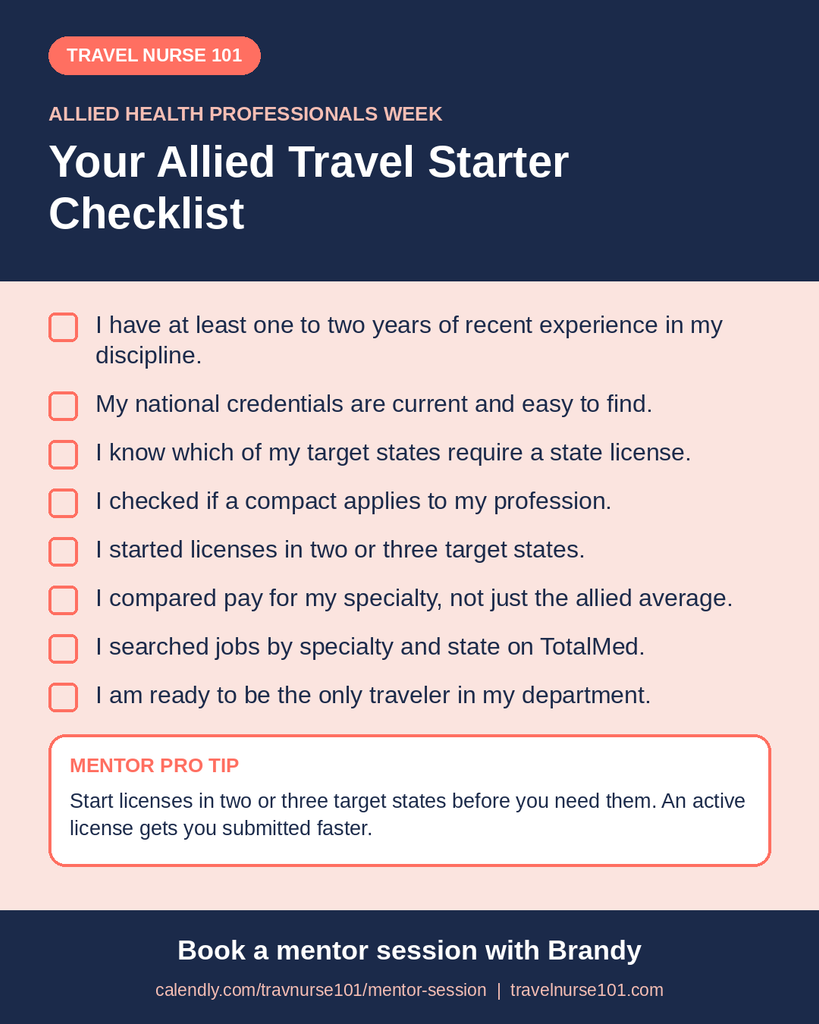
Mentor Pro Tip: Keep a digital folder with your resume, licenses, certifications, references, and commonly requested compliance documents. Having everything organized can help you move more quickly when an opportunity comes along, especially if the facility has a tight start date.
To My Allied Healthcare Professionals: Thank You!
As we celebrate Allied Health Professionals Week, I want to end by reminding you just how important you are to the healthcare team.
Throughout my nursing career, I’ve had the privilege of working alongside allied professionals who have made an incredible difference in the lives of patients and their families. I’ve seen your expertise, compassion, teamwork, and dedication firsthand, and I know how much our patients depend on the work you do every single day.
Whether you’re managing a ventilator, performing an imaging study, processing critical lab results, assisting in surgery, or helping someone regain their independence, your work matters. And you deserve opportunities that support your professional growth, financial goals, and the life you want outside of work, too.
If you’ve been considering allied healthcare travel, I hope this gives you a little encouragement to explore what’s possible. And if you’re already a traveler, maybe it’s time to start thinking about where your next adventure will take you.
Find Your Next Allied Travel Assignment with TotalMed
You can also read more about becoming a healthcare traveler, including advice from a traveling respiratory therapist.
One traveler to another, never underestimate the value you bring to the healthcare team. Thank you for everything you do, and happy Allied Health Professionals Week! Happy travels!
Market information reviewed October 27, 2026. Industry job trends are based on the Aya Healthcare Index; salary comparisons are based on Vivian Health’s published specialty salary data. Job availability, compensation, licensing requirements, and benefits vary by assignment.